How to Focus on Studying: An Evidence-Based Plan

Short answer
To focus on studying, change the set-up before you rely on willpower: put your phone in another room, write down one specific task, set a timer for 25 minutes or less, use the same study place each day and keep your sleep regular. If you still drift, match the fix to the cause, because boredom, anxiety, tiredness and overwhelm each need a different response.
Key takeaways
- Move your phone to another room before you start; silencing it or turning it face down is a weaker fix, and notifications alone have been shown to disrupt attention.
- Write one specific task and an if-then plan for when you will start; a meta-analysis of 94 tests found if-then plans had a medium-to-large effect on goal attainment.
- Use a timer and decide your breaks in advance, but treat the exact lengths as adjustable because studies comparing fixed and self-chosen breaks disagree.
- Study in the same place at the same time so starting becomes more automatic; this is a reasonable inference from habit research rather than a tested study technique.
- Protect regular sleep across the weeks before an exam; in one study of 88 students, sleep over the previous week and month was linked to grades and the single night before was not.
- If you cannot focus, name the cause first: bored, anxious, tired or overwhelmed each has a different fix.
To focus on studying, change your set-up before you try to change yourself. Put your phone in another room, write down one specific task, set a timer, sit in the same place you sat yesterday, and protect your sleep. Those five changes, in that order, remove most of what pulls attention away. If you still cannot concentrate, the cause is usually boredom, anxiety, tiredness or overwhelm, and each one has its own fix further down.
was the average time on task before switching, when 263 students were watched studying at home.
Rosen et al., 2013is the effect of if-then plans on reaching a goal, pooled across 94 tests. That is medium to large.
Gollwitzer and Sheeran, 2006of the variation in one chemistry class's marks was accounted for by sleep measures.
Okano et al., 2019If you only have a minute, skip to the 10-minute start routine and tick it off as you go.
Why is it so hard to focus on studying?
Mostly because the alternatives are closer, easier and more rewarding than the textbook. Researchers who watched 263 school and university students study at home for 15 minutes found they averaged less than six minutes on task before switching, most often to social media or texting. Students who preferred to switch between tasks had more distracting technology to hand and were more likely to be off task.
That study is from 2013 and only observed one short session per person, so do not read it as a measure of anyone's attention span. What it shows is simpler and still useful: when distractions are available, most people take them, quickly. So the plan below starts with the environment and works inwards.
The plan, in order of impact
Do these in order. Each one takes a few minutes to set up, and the earlier ones do the most work.
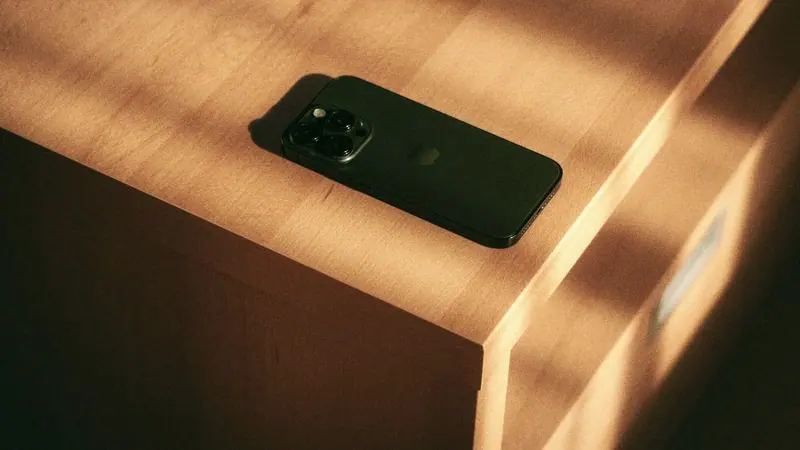
1. Put your phone in another room
Not face down. Not on silent in your pocket. In a different room, or in a bag by the door.
There are two separate reasons. The first is notifications. In one experiment, phone notifications alone significantly disrupted performance on an attention-demanding task, even when participants did not touch the phone, and the size of the disruption was comparable to actually using a phone for a call or text.
The second is the phone simply being there. A well-known 2017 study, Brain Drain, tested 520 undergraduates with their phones silenced and placed on the desk, in a pocket or bag, or in another room. Those with the phone in another room scored better on working memory and reasoning tests than those with it on the desk. The effects were small, and the evidence since has been mixed: a 2024 meta-analysis covering 7,093 participants found a smaller effect than the original, limited to working memory, and warned that most studies in the area are underpowered.
So the honest position is this: a silent phone on your desk may or may not drain your thinking, but a phone in another room cannot buzz, cannot be glanced at and cannot be picked up "for a second". That is reason enough.
The full evidence and step-by-step phone settings are in how to stop phone distraction.
If you study on a laptop, close every tab and app you do not need for this task, and log out of anything you open by reflex.
 How to Stop Phone Distraction While Studying
2. Define one task you could finish
"Study biology" is not a task. You cannot start it, and you cannot tell when it is done. Write one line on paper that names the material and the action:
- "Answer questions 1 to 12 from chapter 4 without notes."
- "Write the method section, 300 words, rough."
- "Make flashcards for lectures 6 and 7, then test myself once."
Then add when and where you will start, as an if-then sentence: "If it is 4 pm and I am at my desk, then I open chapter 4 and start question 1." This format is called an implementation intention. A meta-analysis of 94 independent tests found that forming these plans had a medium-to-large effect on reaching goals (d = 0.65), including getting started and shielding a task from distractions. The tests covered many kinds of goals, not only studying, but the technique costs one sentence.
Here is a card you can copy and fill in before each session.
Task: (material + action, e.g. "questions 1 to 12, chapter 4, no notes")
Done means:
If it is ____ and I am at ____, then I open ____ and start ____.
If I want to check my phone, then I write the urge down and carry on until the bell.
A vague task is also one reason people never begin at all, which is a different problem from losing focus halfway. If that is you, start with why you are putting the task off.
3. Set a timer and decide your breaks in advance
A timer gives the session an end, which makes it easier to begin, and it takes the "should I stop yet?" question off your mind. The usual starting point is the Pomodoro method for studying: 25 minutes of work, 5 minutes off, and a longer break after four rounds.
The research on fixed breaks is small and does not all point the same way:
| Study | Who | What was compared | Result |
|---|---|---|---|
| Biwer and colleagues, 2023 | 87 university students, one day of real study | Fixed breaks (6 minutes after every 24, or 3 after every 12) against breaks whenever students chose | Students choosing their own breaks studied and rested for longer, and reported more fatigue and distraction and less concentration. Work completed was the same. |
| Göksu and colleagues, 2026 | 176 university students, one reading task | Fixed short breaks against self-chosen breaks | No significant difference in test performance. Self-chosen breaks came with better mood, concentration and motivation. |
The 2026 study is worth seeing in detail, because it tested a very short schedule: 12 minutes of reading, then a 3 minute break. Students rated their mood after each break.
Show the numbers
| Rating | Fixed 12/3 breaks (90 students) | Self-chosen breaks (86 students) |
|---|---|---|
| Concentration | 2.46 | 2.78 |
| Motivation to study | 2.21 | 2.68 |
| Energy | 2.5 | 2.77 |
| Distraction | 2.69 | 2.24 |
| Fatigue | 2.5 | 2.46 |
Test scores went slightly the other way, 12.9 out of 20 with fixed breaks against 12.2 with self-chosen ones, and that gap was not statistically significant. Several students on the fixed schedule said the short rounds broke their concentration, which is a point against very short rounds more than against timers. Choosing between 25/5, 50/10 and longer intervals is covered separately.
Neither study found that one approach produced more learning. Take that as permission to experiment: start with 25 and 5, and if the bell keeps cutting you off mid-thought, lengthen the block. There is more on choosing lengths in how long to study before a break.
The quickest test is to sit through one round.
Run one round now
Write your task line first, then start. If 25 minutes feels like too much today, pick the shorter preset.
During the break, stand up and leave the desk. Do not collect your phone until the long break. If you are short of ideas for five minutes away from a screen, there is a list of break ideas sorted by time and place.
 Pomodoro for Studying: What to Do in Each 25 Minutes
4. Use the same place at the same time
Pick one spot that is only for studying if you can: a particular library desk, one end of the kitchen table. Go there at the same time each day.
The evidence here is indirect, and you should know that. In a study of 96 volunteers who repeated an eating, drinking or exercise behaviour daily in the same context, the behaviour became steadily more automatic, though the time to level off ranged from 18 to 254 days. Nobody in it was studying. The reasonable inference is that sitting down at the same desk at the same hour gradually takes less deciding, not that a fixed desk makes you learn better.
Keep the spot boring. Clear it of everything except what the current task needs.
5. Protect your sleep, especially its regularity
This one is last because you cannot do it in the next five minutes, not because it matters least.
Researchers gave activity trackers to 100 students in a university chemistry class (88 finished the study). Longer, better and more consistent sleep went with better marks, and sleep measures accounted for nearly 25% of the variation in performance. Sleep on the single night before a test showed no relation to the result; what counted was sleep across the week and month before.
This is a correlation in one class, so it cannot prove sleep caused the grades.
Sleep measures accounted for nearly 25% of the variance in academic performance.
It does argue against the common trade of sleep for study hours, and it suggests that one good night will not rescue a bad month. If you regularly cannot sleep, or sleep enough and still feel exhausted, that is worth raising with a doctor.
What to do when you still can't focus
Stop and name what is going on. The four common causes need different responses.
| What it feels like | Likely cause | What to try |
|---|---|---|
| You reread the same line; anything else seems more interesting | Bored | Make the task active: close the notes and answer questions from memory, or explain the idea out loud. Shorten the block to 15 minutes. Try low-key music for studying if the material is routine. |
| Tight chest, racing thoughts about failing, checking how much is left | Anxious | Spend five minutes writing the worries down, then return to one small task. See the note below. |
| Heavy eyes, yawning, reading without taking anything in | Tired | Do one short, easy block (sorting notes, flashcards), then stop and go to bed on time. Do not start new, hard material. |
| You do not know where to begin; the pile feels endless | Overwhelmed | List every piece on paper, circle one that takes under 25 minutes, and hide the rest of the list. |
On anxiety: in a set of two laboratory and two classroom experiments, students who spent a few minutes writing about their worries immediately before an important exam scored higher than those who did not, and the benefit was largest for students who were habitually anxious about tests. That research was about exams, not everyday revision, so using it before a study session is an extrapolation. It is quick and harmless to try.
One of the authors of that research, the psychologist Sian Beilock, has given a TED talk on performing under pressure.

Two other situations sit close to these four. If you focus well on some days and resent the bell, you may be after the absorbed state researchers call flow, which has its own conditions. And if timers have never worked for you and you have ADHD or suspect it, the usual rules need adjusting; see the Pomodoro Technique with ADHD.
If the real problem is that you never start at all, that is procrastination, which is about avoiding a feeling more than about attention. See how to stop procrastinating.
And if concentration has been a struggle for a long time, in most parts of life, or comes with persistent low mood or worry, speak to a GP or another clinician. Study technique is not a substitute for that conversation.
A 10-minute start routine
Use this whenever starting feels hard. The first seven minutes are set-up; the last three are real work.
- Minute 0 to 1. Phone on silent, into another room or a bag by the door.
- Minute 1 to 2. Clear the desk. Keep only what this task needs. Fill a glass of water.
- Minute 2 to 4. Close every tab and app you do not need. Open the one document or book you do.
- Minute 4 to 6. Write one line: the task, and what "done" looks like. Add your if-then start sentence.
- Minute 6 to 7. Set a timer for 25 minutes. If that feels impossible today, set 10.
- Minute 7 to 10. Do the smallest first piece: read the first question, write the first sentence, copy out the first formula. Do not judge the quality.
When the ten minutes are up, you are already inside a timed block with the task open. Keep going until the bell.
Show the numbers
| Schedule in minutes | |
|---|---|
| Normal day | 7 other, 25 focus, 5 short break, 25 focus, 5 short break |
| Low day | 7 other, 10 focus, 5 short break, 10 focus, 5 short break |
Source: Example schedule
Tick the steps off the first few times, until the order is automatic.
Start routine
The six steps above as a list. Ticks are saved in this browser.
Once single rounds are easy, you can string them into longer protected stretches; the planning method is in deep work sessions.
If studying alone is the problem
Some people hold a session together far better when someone else is working at the same time. A study partner at the next library desk does this, and so does a video call left running with cameras on. Working in someone's presence has a name, body doubling, and although it has little formal research behind it, it costs nothing to test. An online study room gives you the same thing with classmates or strangers.
A lighter option is Work Club, a free shared timer that runs in the browser with no account. Everyone in the room sees the same countdown, and the chat is locked during focus and opens on breaks, so the people you are with cannot become the distraction. Cameras and voice are both optional, so friends can see each other working, and anyone in voice has their microphone muted automatically when a focus round starts. There is more on setting this up in how to study with friends online.
Common questions
Why can't I focus on studying even when I want to?
Usually because something in the set-up is working against you: a phone within reach, a task that is too vague to start, no end point, or too little sleep. In one observation study, students studying at home stayed on task for less than six minutes on average before switching, mostly to technology. Fix the environment and the task definition first, then look at mood, tiredness and overwhelm.
How long should I study before taking a break?
There is no proven best number. One 2023 study found that fixed breaks, such as 6 minutes after every 24, left students less tired and distracted than breaks taken whenever they felt like it, with the same amount of work done. A larger 2026 study found the opposite for mood and no difference in learning. Start with 25 minutes and adjust.
Does putting my phone on silent help me concentrate?
It helps with notifications, which one experiment found disrupt attention even when you do not pick the phone up. Whether a silent phone on the desk still costs you anything is disputed: the original 2017 study said yes, a 2022 replication found no effect, and a 2024 meta-analysis found a small effect on working memory only. Putting it in another room costs nothing and also removes the temptation to check it.
Is it better to study in the same place every time?
For getting started, probably yes. Habit research shows that repeating a behaviour in a consistent context makes it more automatic over time, although it can take anywhere from weeks to months. That research was on everyday health behaviours rather than studying, so treat a fixed study spot as a sensible default, not a proven rule.
How do I focus on studying when I'm tired?
Do a short, easy session and then fix the cause, which is usually sleep. A study that tracked students with wearables found that longer, better and more consistent sleep over the previous weeks went with better grades, while the night before a test on its own did not. If tiredness lasts for weeks despite enough time in bed, speak to a doctor.
When should I get help for concentration problems?
If you have struggled to concentrate for a long time, in most settings and not only when studying, or if it comes with low mood, constant worry or poor sleep, talk to a GP or another clinician. This article describes study habits and cannot diagnose ADHD, anxiety, depression or a sleep disorder.
Sources
- Brain Drain: The Mere Presence of One's Own Smartphone Reduces Available Cognitive Capacity, Journal of the Association for Consumer Research (2017)
- Does the Mere Presence of a Smartphone Impact Cognitive Performance? A Meta-Analysis of the Brain Drain Effect, Media Psychology (record at Vrije Universiteit Amsterdam) (2024)
- The attentional cost of receiving a cell phone notification, Journal of Experimental Psychology: Human Perception and Performance (PubMed) (2015)
- Facebook and texting made me do it: Media-induced task-switching while studying, Computers in Human Behavior (2013)
- Implementation intentions and goal achievement: a meta-analysis of effects and processes, Advances in Experimental Social Psychology (University of Konstanz repository) (2006)
- Understanding effort regulation: Comparing 'Pomodoro' breaks and self-regulated breaks, PubMed, US National Library of Medicine (2023)
- When to Take a Break: Comparing Effects of Systematic Short (Pomodoro) and Self-Regulated Breaks on Subjective Experience and Actual Learning, Behavioral Sciences (PubMed) (2026)
- How are habits formed: Modelling habit formation in the real world, European Journal of Social Psychology (2010)
- Sleep quality, duration, and consistency are associated with better academic performance in college students, npj Science of Learning (2019)
- Writing about testing worries boosts exam performance in the classroom, Science (PubMed) (2011)
Published 12 November 2026. Last checked and updated 13 November 2026. See how these guides are written.