Flow State: How to Get Into It and What Breaks It
Short answer
You cannot switch flow on, but you can set up the conditions the research identifies: a task that stretches your skills without overwhelming them, a clear next goal, and immediate feedback on progress, all with distractions removed. Flow is fragile, so protect a long enough block and do not let a timer cut a good run short. The popular claim that flow makes you 500% more productive comes from executives' own estimates, not a measurement.
Key takeaways
- Nakamura and Csikszentmihalyi name the conditions of flow as challenges that stretch existing skills, clear proximal goals, and immediate feedback about progress.
- The balance is described as intrinsically fragile: too much challenge tips into anxiety, too little into boredom.
- A meta-analysis of 28 studies found the link between challenge-skill balance and flow was moderate, and weaker in work and education settings, so matching difficulty helps but guarantees nothing.
- The 500% productivity figure traces to a McKinsey article reporting what executives said when asked how much more productive they were at their peak.
- In a study of 94 students, Pomodoro breaks, flexible breaks and self-chosen breaks produced no differences in flow, productivity or task completion over a two-hour session.
- Keith Sawyer's group flow describes people creating something together, such as a jazz ensemble, which is different from working quietly side by side.
You get into a flow state by setting up its conditions and then starting: choose a task that stretches your skills without swamping them, give yourself a clear next goal, make sure you can see straight away how you are doing, and remove anything that can interrupt you. You cannot force flow, and you will not get it every session. What you can do is make it much more likely, and stop breaking it once it arrives.
If you are about to start work, go straight to the pre-session checklist. If a session has just gone badly, the three-question quiz will point at the likeliest cause.
What is a flow state?
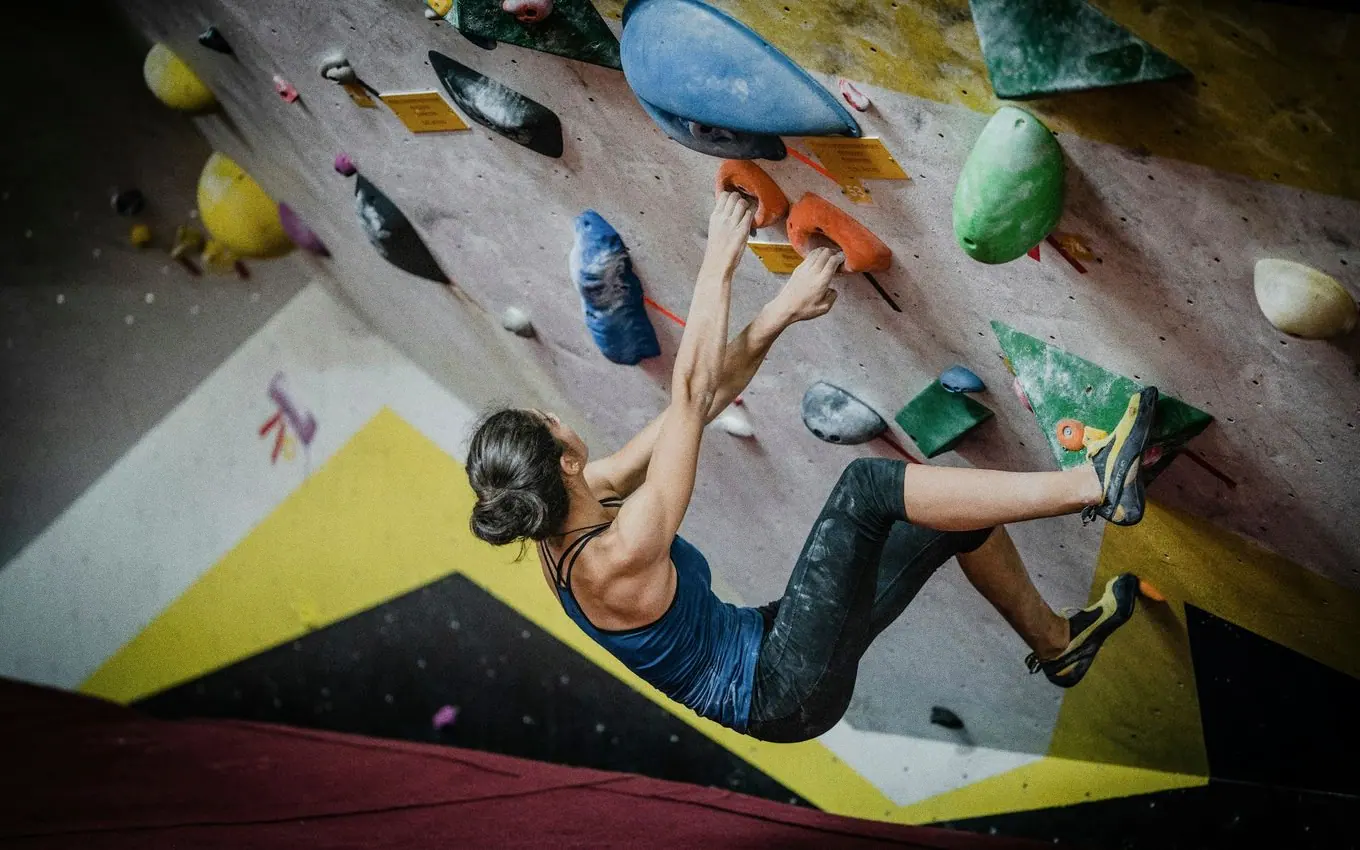
Flow is the experience of being completely absorbed in what you are doing. The psychologist Mihaly Csikszentmihalyi began studying it in the 1970s by interviewing chess players, rock climbers, dancers and surgeons about the moments when their work felt most rewarding.
In their chapter The Concept of Flow, Jeanne Nakamura and Csikszentmihalyi describe the state as having these characteristics:
- Intense and focused concentration on what you are doing in the present moment
- A merging of action and awareness
- Loss of reflective self-consciousness
- A sense that you can control your actions
- Distortion of time, typically a sense that it has passed faster than normal
- Experiencing the activity as rewarding in itself
"In the zone" is the everyday name for the same thing.
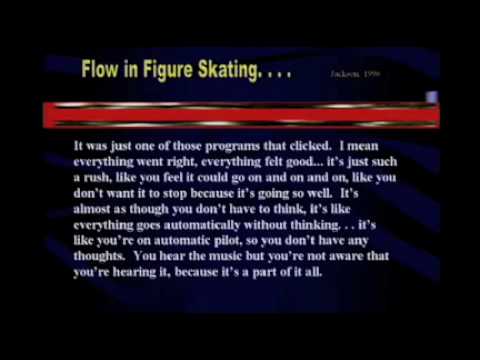
Csikszentmihalyi explained the idea himself in a TED talk, which is the best short introduction to it.
What conditions produce flow?
The same chapter is specific about what has to be in place. The conditions of flow include:
- Perceived challenges that stretch existing skills, neither overmatching nor underusing them.
- Clear proximal goals, meaning you know what you are trying to do right now, not just eventually.
- Immediate feedback about the progress you are making.
The authors call the balance "intrinsically fragile". If the challenge starts to exceed your skill, you become vigilant and then anxious. If your skill exceeds the challenge, you relax and then get bored. Later research refined this: flow is most likely when challenge and skill are both above your own average. When both are low, the result is apathy.
Two details are easy to miss. First, what counts is the challenge and skill you perceive, not some objective level. Second, the authors write that a person can find flow in almost any activity, including working a cash register or ironing clothes. It is about how the task is structured, not how glamorous it is.
Keith Sawyer, who did his PhD with Csikszentmihalyi, summarises the conditions as four, adding one that is implied above: flow occurs when you are free to fully concentrate on the task.
How strong is the evidence?
Reasonable, not overwhelming. A meta-analysis of 28 studies found that the relationship between challenge-skill balance and flow was moderate. It was weaker in work and education contexts, and clear goals and a sense of control were also robust contributors. So matching difficulty to skill tilts the odds. It is not a switch.
Much of the wider flow literature also relies on people describing their own experience afterwards, for a reason the researchers themselves point out: interrupting someone in deep flow to ask about it destroys the thing you are trying to measure.
Does flow make you 500% more productive?
You will see this claim in many articles about flow, usually without a source. It traces to a 2013 McKinsey Quarterly article, Increasing the 'meaning quotient' of work.
Here is what that article says. Over about a decade, the authors ran workshops with more than 5,000 executives, asking them to recall their own peak performance with a team. When asked how much more productive they were at their peak than on average, executives gave a range of answers, and "the most common at senior levels is an increase of five times".
That is a remembered self-estimate from a workshop exercise. Nobody's output was measured, and the question was about peak performance in general, not about flow as psychologists define it. It tells you that people remember their best work as far better than their ordinary work. It does not tell you that flow multiplies output by five.
The same caution applies to confident claims about what flow does in the brain. The honest summary is that flow feels good, tends to go with doing well, and is worth setting up for. The precise size of any productivity gain is not established.
Set against the research cited in this guide, the figure looks like this.
executives gave the self-estimates behind the 500% claim. Nobody's output was measured.
McKinsey Quarterly, 2013studies in the meta-analysis that found a moderate link between challenge-skill balance and flow.
The Journal of Positive Psychology, 2015students in the 2025 study where Pomodoro and self-chosen breaks gave the same reported flow.
Behavioral Sciences, 2025What can you control, and what can't you?
| You can control | You cannot control |
|---|---|
| Which task you choose | Whether flow shows up today |
| How hard the task is (scope it up or down) | How long it takes to arrive |
| How clear the next goal is | Your sleep debt and mood, at least not in the next hour |
| How fast you get feedback | Other people's emergencies |
| What can interrupt you | How long it lasts once it starts |
| How long the block is |
The trap is treating flow as the goal. If you spend a session checking whether you are in flow yet, you are attending to yourself, and loss of self-consciousness is part of the state. Aim at the task. Flow is a side effect. The left-hand column is also most of what goes into how to focus on studying on an ordinary day, flow or no flow.
A pre-session checklist for flow
Run through this in two minutes before you start.
- One task. Not three. Close everything unrelated to it.
- A goal for the next 20 minutes. "Outline the argument of section 3", not "work on essay". When you reach it, set the next one.
- A feedback loop. Decide how you will know you are making progress: tests passing, a word count, problems checked against answers, a sketch that looks right.
- Difficulty check. If the task feels crushing, cut it down to a smaller piece. If it feels dull, raise the bar: a tighter deadline, a higher standard, a harder version.
- Inputs off. Phone in another room, notifications off, email and chat closed. If the phone is the sticking point, see how to stop phone distraction.
- Loose ends parked. Write down anything nagging at you with its next step, so it stops asking for attention.
- A long enough block. At least 50 minutes, ideally 90. Tell anyone who might interrupt when you will be free.
- Materials ready. Water, notes, files open. Getting up to find something is a self-made interruption.
Here is the same list in a form you can tick off before each session.
Flow conditions: ready to start?
A two-minute check, not a guarantee. Ticks are saved in this browser.
For item 7, a short message sent in advance does most of the work, at home or in an office. Teams that want to make this a habit can borrow from focus time for remote teams.
Heads down until 11:30 on one thing.
Phone is off and chat is closed.
If it is urgent, knock or call twice. Otherwise I will reply when I surface.
If you like working to sound, pick something without surprises; music for studying goes through the options.
What breaks flow?
Interruptions. Staying in flow requires attention to stay held by the task. Any notification, question or knock breaks that. In a lab experiment by Gloria Mark and colleagues, people who were interrupted during an email task did not finish more slowly (they were slightly faster), but after only 20 minutes they reported more stress, frustration, time pressure and effort. That is roughly the opposite of the calm control that characterises flow.
The chart shows the ratings the 48 participants gave after working with and without interruptions.
Show the numbers
| Rating | No interruptions | Interrupted, same topic | Interrupted, different topic |
|---|---|---|---|
| Stress | 6.92 | 9.46 | 9.13 |
| Frustration | 4.73 | 6.63 | 6.48 |
| Time pressure | 11.02 | 12.69 | 12.17 |
| Effort | 9.5 | 11.04 | 11.52 |
Most interruptions at a desk at home are ones you can remove in advance, which is the subject of how to stay focused working from home.
Switching tasks yourself. A quick look at your inbox is not free. Sophie Leroy's experiments found that attention lingers on an unfinished task and performance on the next one suffers. This is why item 6 on the checklist matters.
Wrong difficulty. Too hard and you get anxious; too easy and your mind wanders. Adjust the task, not your effort.
Vague goals. If you have to stop and work out what to do next, you have left the task to manage the task.
Watching yourself. Nakamura and Csikszentmihalyi note that anxiety shifts attention to the self and its shortcomings. Worrying about how you are doing, or about being judged, pulls you out.
What got in the way today?
If a session never took off, these three questions sort the likely cause into one of the groups above.
What got in the way today?
Three questions about the session you just had. It applies the list above as a rule of thumb, not a diagnosis.
Your result
Shrink the task and sharpen the goal
Too much challenge and a vague goal tip you into anxiety. Cut the task down to one piece you can finish in 20 minutes and decide how you will check it. If starting is the real obstacle, use the methods in how to stop procrastinating.
Your result
Raise the bar
Skill is outrunning challenge, which leads to boredom. Set a tighter deadline, a higher standard or a harder version. If the task cannot be made harder, do it in short timed rounds and save your long block for something that stretches you.
Your result
Clear the inputs
The task was fine and the surroundings were not. Put the phone in another room, close email and chat, and tell people when you will be free. How to stop phone distraction has the details.
How do timers interact with flow?
Timers and flow pull in slightly different directions, and it helps to be clear about what each is for.
A timer is a starting tool, which is how many people use the Pomodoro Technique. It makes a block feel finite, which gets you over the hump of beginning. But a bell that rings at 25 minutes does not know whether you were stuck or in the middle of your best run of the day. Stopping then throws away the hardest thing to get.
There is a little direct evidence. In a 2025 study of 94 university students working through a two-hour study session, one group took fixed Pomodoro breaks (5 minutes after every 25), one chose when to stop but had the break length set for them, and one managed breaks freely. There were no differences between the groups in flow, productivity or task completion. Fatigue rose faster with Pomodoro breaks, though overall levels did not differ. It was one session with students reporting on themselves, so it is not the last word, but it suggests the fixed bell neither wrecks flow nor creates it.
A practical way to use both:
- Use short rounds to start, long rounds to stay. If starting is the problem, 25 minutes is your friend. For work where absorption is the aim, try 50 minutes with a 10 minute break, or a single 90 minute block. Pomodoro intervals compares the common lengths.
- Know when to ignore the bell. If it rings while you are absorbed and progressing, carry on to the next natural stopping point, then take a longer break and spend it away from the screen.
- Know when to obey it. If you are stuck, rereading the same line, or irritable, the bell is doing you a favour. Stop.
- Do not skip breaks all day. One extended run is fine. Four hours without standing up is not flow, it is just sitting.
Here are three ways to lay out the same two hours, from most bells to fewest.
Show the numbers
| Schedule in minutes | |
|---|---|
| 25/5 to get going | 25 focus, 5 short break, 25 focus, 5 short break, 25 focus, 5 short break, 25 focus |
| 50/10 for absorbing work | 50 focus, 10 short break, 50 focus |
| Short opener, then one long run | 25 focus, 5 short break, 80 focus |
Source: Example schedules, not measured data
To fit one of these into the time you really have, enter it below.
Plan a block long enough for flow
Enter the time you have and an interval. Longer rounds mean fewer bells.
For how to schedule longer blocks across a week, see deep work sessions.
 Deep Work Sessions: How to Plan One and How Many Hours
How do you get into flow while studying?
Studying is hard to flow in when it is passive. Rereading and highlighting give you no goal beyond "get to the end" and no feedback at all.
Change the format so the conditions exist:
- Goal: "Answer these 15 questions on cell respiration", not "revise biology".
- Feedback: check each answer straight away, or after every five.
- Challenge: aim to get most, but not all, right. If you are getting everything right, move to harder questions or past papers. If you are getting almost nothing right, go back a level.
Some study tasks will never produce flow, and they still need doing. For those, short timed rounds work better; see how long you should study before a break, and the Pomodoro method for studying for a full revision day built from them.
 Pomodoro for Studying: What to Do in Each 25 Minutes
Is there such a thing as group flow?
Yes, though it is narrower than the phrase suggests. Keith Sawyer developed the idea from studying jazz and theatre improvisation, and later business and sports teams. He describes ten conditions under which it tends to emerge:
- A clear shared goal
- Close listening
- Keeping it moving forward (building on what was just said)
- Complete concentration
- Being in control
- Blending egos
- Equal participation
- Familiarity
- Communication
- The potential for failure
Look at that list and you can see what kind of activity it describes: people making one thing together and responding to each other in real time. A band, a writers' room, a pair debugging the same problem.

That is different from a group of people each doing their own work in the same room or on the same timer. Working alongside others, which is usually called body doubling, can help you start and keep you from drifting, but it is individual flow, if it comes, with company. A group study session comes closer to Sawyer's sense only in the stretches where everyone is solving the same problem aloud. It would be a stretch to call it group flow in Sawyer's sense.
Where a shared timer room fits
For that second kind of session, Work Club gives a group one shared timer in the browser, with the chat locked for everyone during focus and open on breaks, so nobody can interrupt anyone mid-run. The room can change the round lengths, so set a longer focus period if absorption is the aim. The timer is shared, which means the bell rings for everyone at once; if you are deep in something when the break starts, nothing stops you from working through it and rejoining at the next round. It has optional voice and cameras but no screen sharing, and microphones are muted automatically when a focus round starts, so it is built for working side by side, not for the talk-it-through collaboration Sawyer describes.
The short version
Pick one task that stretches you. Know the next small goal. Make progress visible. Shut the door on everything else. Give it a long block, and when it is going well, do not stop just because a timer said so.
Common questions
What is a flow state?
Flow is a state of complete absorption in a task. Researchers describe it as intense concentration on the present moment, a merging of action and awareness, loss of self-consciousness, a sense of control, time seeming to pass faster than usual, and finding the activity rewarding in itself. The psychologist Mihaly Csikszentmihalyi introduced the concept in the 1970s.
How long does it take to get into flow?
There is no well-established number. Figures such as 15 or 20 minutes are widely repeated but the foundational flow research does not give a set time. Plan for the opening stretch of a session to feel effortful, and give yourself a block of at least 50 to 90 minutes so there is room for absorption to develop.
Can you force yourself into flow?
No. You can arrange the conditions, which are a stretching task, a clear immediate goal, quick feedback and no distractions, and then start working. Checking whether you are in flow yet works against it, because part of the state is losing awareness of yourself.
Does flow really make you 500% more productive?
That number is not a measured result. It comes from a 2013 McKinsey article in which executives in workshops were asked how much more productive they were at their peak than on average, and the most common answer among senior executives was five times. It is a self-estimate about remembered peak performance, so it should not be quoted as a research finding about flow.
Can you get into flow while studying?
Yes, but passive studying rarely produces it because it gives no feedback. Practice questions, problems with checkable answers and self-testing supply a clear goal and an immediate signal of how you are doing. Adjust the difficulty so you are getting most, but not all, of them right.
Do Pomodoro timers ruin flow?
A bell can end a good run early, which is the main risk. One study of 94 students found no difference in reported flow between fixed 25 minute Pomodoro rounds and self-chosen breaks over two hours, so the effect is not dramatic either way. Use the timer to get started, and if you are absorbed when it rings, keep going to the next natural stopping point.
Sources
- The Concept of Flow, Handbook of Positive Psychology, Oxford University Press (2002)
- The challenge-skill balance and antecedents of flow: A meta-analytic investigation, The Journal of Positive Psychology (2015)
- What Mel Brooks Can Teach Us about Group Flow, Greater Good Science Center, University of California, Berkeley (2012)
- Group Flow and the Science of Thinking Together, Keith Sawyer (author's newsletter) (2026)
- Increasing the meaning quotient of work, McKinsey Quarterly (2013)
- Investigating the Effectiveness of Self-Regulated, Pomodoro, and Flowtime Break-Taking Techniques Among Students, Behavioral Sciences (2025)
- The Cost of Interrupted Work: More Speed and Stress, Proceedings of CHI 2008 (University of California, Irvine) (2008)
- Why is it so hard to do my work? The challenge of attention residue when switching between work tasks, Organizational Behavior and Human Decision Processes (2009)
Published 12 November 2026. Last checked and updated 13 November 2026. See how these guides are written.