How to Stop Procrastinating: What the Research Supports

Short answer
Procrastination is usually a way of escaping the unpleasant feeling a task gives you, not laziness or bad time management. To stop, make the task feel less bad and make starting automatic: write an if-then plan for when and where you will begin, shrink the first step to a few minutes, forgive yourself for past delays and arrange to work alongside someone.
Key takeaways
- Researchers describe procrastination as putting short-term mood repair ahead of long-term goals: you avoid the task to avoid the feeling it causes.
- A meta-analysis of 691 correlations found task aversiveness, task delay, low self-efficacy and impulsiveness were strong predictors of procrastination.
- If-then plans that name when and where you will start had a medium-to-large effect on goal attainment across 94 tests.
- Students who forgave themselves for procrastinating before one exam procrastinated less before the next, in a study of 119 first-year students.
- The most famous study on self-imposed deadlines was retracted in 2026 after a replication found deadlines had a negligible effect, so do not rely on deadlines alone.
- A meta-analysis of 24 intervention studies found procrastination can be reduced, with cognitive behavioural therapy showing the strongest effect.
To stop procrastinating, stop treating it as a time-management problem. You put the task off because it makes you feel bad, and avoiding it makes you feel better for a while. The fixes that have research behind them work on that: decide in advance exactly when and where you will start, make the first step small enough that it barely stings, drop the self-criticism, and arrange to work alongside someone else.
correlations pooled in the largest summary of what predicts procrastination.
Steel, 2007is the effect of if-then plans on reaching a goal across 94 tests, which is medium to large.
Gollwitzer and Sheeran, 2006of procrastination interventions, with 1,173 participants, found a large reduction that held at follow-up.
van Eerde and Klingsieck, 2018If you have a task waiting right now, go straight to the quiz on why you are avoiding it or the five-minute start.
Why do I procrastinate?
Researchers define procrastination as voluntarily delaying something you intended to do, even though you expect to be worse off for the delay. That last part separates it from sensible postponing, and from laziness. You care, you intend to do it, and you still do not.
The most useful explanation comes from psychologists Fuschia Sirois and Timothy Pychyl. In a 2013 review paper, they argue that procrastination is "the primacy of short-term mood repair and emotion regulation over the longer-term pursuit of intended actions". A task that is boring, frustrating, vague or threatening produces an unpleasant feeling. Doing something else removes the feeling immediately. The bill goes to your future self, who you quietly assume will be more in the mood.
They also point out the cruel part: it does not even work. Avoidance brings guilt and a tighter deadline, so the task feels worse the next time you look at it.
Two cautions about this account. It is a theoretical review that pulls together other people's experiments, not a single decisive study. And it describes what happens in the moment, not a personality type.
On the personality side, the largest summary is Piers Steel's 2007 meta-analysis, which pooled 691 correlations. The strong and consistent predictors of procrastination were:
- Task aversiveness: how unpleasant the task is.
- Task delay: how far away the reward or deadline is.
- Self-efficacy: whether you believe you can do it.
- Impulsiveness, along with low conscientiousness, distractibility and poor organisation.
The tables in the full paper give the average correlation for each one, which shows how far apart the strong and weak predictors are.
Show the numbers
| Factor | Average correlation (size) |
|---|---|
| Conscientiousness (less of it, more delay) | 0.62 |
| Distractibility | 0.45 |
| Impulsiveness | 0.41 |
| Task aversiveness | 0.4 |
| Self-efficacy (less of it, more delay) | 0.38 |
| Neuroticism | 0.24 |
| Sensation seeking | 0.17 |
Source: Steel, 2007, Tables 2 to 5
These are correlations from self-report questionnaires, so they show what tends to go together, not what causes what.
Neuroticism, rebelliousness and sensation seeking showed only a weak connection. So the popular idea that procrastinators are mostly anxious worriers or thrill-seekers who "work best under pressure" is not well supported. The picture is more ordinary: an unpleasant task, a distant pay-off, doubt that you can do it, and something more appealing within reach.
Each of those is something you can change. That is what the rest of this article is about.
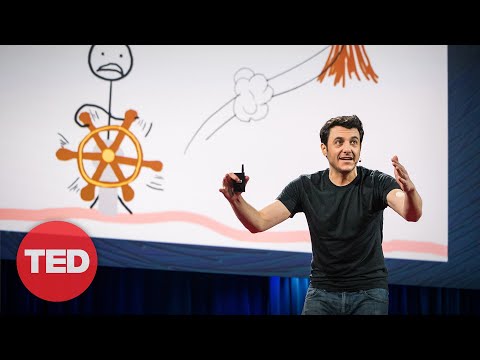
For a lighter take before the practical part, the writer Tim Urban's TED talk describes the same pattern from the inside.
Why am I avoiding this task? A quick decision flow
Pick the task you are avoiding right now and go down the list. Stop at the first "yes".
- Do I know exactly what the next physical action is? If no, the task is too vague. Go to "Shrink the first step".
- Do I know when and where I will start? If no, write an if-then plan. Go to "Write an if-then plan".
- Do I believe I can do it? If no, the first step is too big or you are missing something. Shrink it, or make the first step "ask for help with X".
- Is it boring or unpleasant, but clear and doable? Then you need company or a container. Go to "Work alongside other people" and set a short timer.
- Am I avoiding it because I already feel bad about how late it is? Go to "Drop the self-criticism".
- Is something more tempting within arm's reach? Usually a phone. Move it. See how to stop phone distraction.
| What you notice | Likely driver | First move |
|---|---|---|
| "I don't know where to begin" | Vague task | Write the next visible action in one line |
| "I'll do it later today" | No start cue | If-then plan with a time and place |
| "I'll only mess it up" | Low self-efficacy | A deliberately rough ten-minute version |
| "It's so dull" | Task aversiveness | Timer plus someone working beside you |
| "I've left it too long, I can't face it" | Guilt from past delay | Forgive the delay, then do five minutes |
| "Just one more video" | Temptation nearby | Phone and tabs out of reach |
If you would sooner click than read a table, the quiz below asks the same questions.
Why are you putting this task off?
Four questions about the task in front of you. It applies the decision flow above as a rule of thumb; it is not a diagnosis.
Your result
The task is too vague or too big
Write the next visible action in one line and make it small enough to finish in five minutes. See Shrink the first step and copy the two-minute script there.
Your result
You have no start cue
The intention is there but nothing triggers it. Write one sentence with a time and a place, using the if-then plans below.
Your result
It is clear, doable and unpleasant
Give it a container and some company: a short timer and someone working beside you. See Work alongside other people, and move your phone out of reach first.
Your result
Guilt about the delay is now the obstacle
More self-criticism will give you more to avoid. Name the delay plainly, then do five minutes. See Drop the self-criticism.
Techniques with evidence behind them
Write an if-then plan
A goal ("I will revise chemistry this week") says what you want. An if-then plan says when, where and how you will act: "If situation Y happens, then I will do X." Psychologist Peter Gollwitzer calls these implementation intentions.
In a meta-analysis of 94 independent tests, Gollwitzer and Paschal Sheeran found that forming if-then plans had a medium-to-large effect on goal attainment (d = 0.65). The plans helped people get started, and also helped them protect a task from distractions once under way. The tests covered many kinds of goals, so this is not a procrastination-specific result, but getting started is exactly the step procrastination blocks.
The plan works because the decision is already made. When the cue arrives, there is nothing left to negotiate with yourself.
If-then plans you can copy
To start:
- If it is 4 pm and I am at my desk, then I open the essay document and write one sentence.
- If I finish dinner, then I put my phone on the shelf in the hall and open the problem set.
- If I sit down in the library, then I start a 25-minute timer before I do anything else.
- If I open my laptop in the morning, then I work on the report for ten minutes before I open email.
To handle the urge to escape:
- If I feel the urge to check my phone, then I write the urge on a sticky note and keep going until the timer ends.
- If I catch myself tidying, snacking or reorganising my notes, then I say "that is avoidance" and do two more minutes of the task.
- If I get stuck on a question, then I mark it, move to the next one and come back at the end.
To recover:
- If I miss my start time, then I start at the next half hour with a ten-minute block.
- If I notice I am telling myself off, then I say "I delayed, lots of people do, I am starting now" and do the first step.
Write yours by hand and put it where you will see it. One or two plans are enough.
Shrink the first step
Since unpleasantness and self-doubt both predict procrastination, the simplest thing to do is make the starting point less unpleasant and impossible to fail. None of the studies cited here tested a "two-minute rule" by name, so treat this as a practical inference from Steel's findings, not a proven method.
Rewrite the task until the first step takes under five minutes and needs no courage:
| Avoided task | First step |
|---|---|
| Write the essay | Open the document and type the title and three bullet points |
| Revise for the exam | Put the past paper on the desk and read question 1 |
| Do the maths homework | Copy out the first problem |
| Reply to the difficult email | Write one bad draft sentence and do not send it |
| Start the dissertation | Create the file and paste in the marking criteria |

If you cannot think of a first step, use this one. It works for almost any desk task.
0:00  Put the phone in another room.
0:20  Open the one file, book or page the task needs. Nothing else.
0:40  Write at the top: "Done for today means ______."
1:00  Write one bad sentence, copy out one question, or list three bullet points.
2:00  Stop and choose: carry on for ten minutes, or stop here and book the next start.
The timings are a suggestion to make the step concrete, not a tested protocol.
Show the numbers
| Schedule in minutes | |
|---|---|
| Two minutes, then stop | 2 focus |
| Two minutes, then a short round | 2 focus, 10 focus, 5 short break |
| Two minutes, then a full round | 2 focus, 23 focus, 5 short break |
Source: Example schedule
Give yourself explicit permission to stop after the first step. Often you will keep going, because the feeling you were avoiding turns out to be milder than expected once you are inside the task. If you do stop, you have still broken the pattern of not starting. A short timer helps here; the Pomodoro technique is a ready-made version, and for a task you are dreading the shorter Pomodoro intervals are the ones to start with.
Drop the self-criticism
If procrastination is an escape from bad feelings, piling on guilt gives you more to escape from.
In a study of 119 first-year university students, those who reported forgiving themselves for procrastinating before their first midterm procrastinated less when preparing for the second. The link ran through mood: more self-forgiveness went with less negative feeling, which went with less delay.
Separately, across four samples totalling 768 people, Sirois found that people who procrastinate more reported lower self-compassion and higher stress, and that low self-compassion statistically accounted for part of the link between the two.
Be clear about the limits. Both studies rely on self-report, and neither randomly assigned people to be kinder to themselves, so they show an association, not proof that self-compassion causes less procrastination. What they do undercut is the belief that you need to be hard on yourself to get moving.
In practice: name what happened without the commentary ("I put this off for a week"), remind yourself that this is common, and move straight to the first step.
Use commitments, but do not lean on deadlines alone
For twenty years, advice on procrastination cited a 2002 study by Dan Ariely and Klaus Wertenbroch, which reported that people set themselves costly deadlines and that these improved performance. You will still find it quoted widely.
That paper has been retracted. The journal published the retraction notice in September 2026, shortly after a replication of the paper's second study found that changing the deadlines had a negligible effect on performance and that evenly spaced, externally imposed deadlines "did not stand out for their effectiveness in reducing procrastination".
So the claim "self-imposed deadlines are proven to work" should be dropped. That does not make commitments useless, only unproven. If you want to try one, make it concrete and involve another person: tell a classmate you will send them your draft by 6 pm on Thursday, or book a time to go through the problem set together. An accountability partner is a commitment with a person attached.
Work alongside other people
Many people start more easily when someone else is working in the same room or on the same call. The ADHD community calls this body doubling. It has very little formal research behind it so far, so it rests mainly on widespread personal reports. It is free to test, and you will know within one session whether it helps you. If you have ADHD, or suspect it, the Pomodoro Technique with ADHD covers the adjustments people make to timers and first steps.
Ways to do it:
- Sit with a friend in the library and agree a start and finish time. There is a format for this in how to run a group study session.
- Join a video coworking session if being seen keeps you honest, or an online study room if you would like company without a booking.
- Use a shared timer so that several of you start and stop together.
For the last one, Work Club is a free option that runs in the browser without an account: you send a link, everyone sees the same countdown, and the chat stays locked until the break. Its cameras and voice are optional, so a friend can watch you start if you both turn cameras on. If you need a booked partner you do not know, choose a matching service; virtual body doubling compares the approaches, and Focusmate and its alternatives lists the services that do the matching.
If you work from home with nobody around, the same fixes apply, and they overlap with the ones for staying focused when you work from home.
 Body doubling: what it is and whether it works
Does any of this work in the long run?
A meta-analysis of 24 intervention studies (1,173 participants) found a large reduction in procrastination after intervention, and the reduction held at follow-up. It compared self-regulation training, cognitive behavioural therapy, other therapies and strengths-based approaches. Cognitive behavioural therapy reduced procrastination most. The authors note that the evidence base is still small and call for stronger studies.
Two things follow. Procrastination is changeable, not a fixed trait. And if it is seriously harming your studies, work or health, or sits alongside persistent low mood, anxiety or long-standing attention difficulties, structured help from a clinician has better evidence than any tip in a blog post. Speak to a GP or a mental health professional.
How to start working in the next five minutes
- Pick the one task you are avoiding most.
- Run the decision flow above and name the driver.
- Write the first step, small enough to finish in five minutes.
- Write one if-then plan with a time in the next hour.
- Move your phone to another room.
- Message one person: "Starting X at 3 pm, will tell you when the first bit is done."
- When the cue arrives, do the first step. Then decide whether to continue.
Tick these off as you do them.
Start in the next five minutes
The seven steps above as a list. Ticks are saved in this browser.
A short round is easier to begin than an open-ended one, so set the smallest timer you would not argue with.
Ten minutes, then decide
Start the short preset for a task you are dreading. When it rings you are allowed to stop.
Starting is one skill and staying is another. Once you are in, what you do with the pauses matters too, and there is a list of breaks that do not turn into an hour on your phone.
 How to Focus on Studying: An Evidence-Based Plan
Common questions
Why do I procrastinate even when I know it will make things worse?
Because avoiding the task makes you feel better right now, and the cost falls on you later. Psychologists Fuschia Sirois and Timothy Pychyl describe this as giving priority to short-term mood repair over your future self. The task feels boring, hard or threatening, so you escape the feeling by doing something else.
Is procrastination the same as laziness?
No. Researchers define procrastination as voluntarily delaying something you intended to do, despite expecting to be worse off for it. Laziness implies not caring. People who procrastinate usually care a great deal, feel bad about the delay, and often stay busy with other tasks while avoiding the important one.
How do I stop procrastinating on homework?
Decide in advance exactly when and where you will start, and make the first step tiny. For example: if I get home and put my bag down, then I open the worksheet and do question 1. Put your phone in another room, set a timer for 10 to 25 minutes and work with a friend or classmate if you can.
Does setting my own deadlines help?
The evidence is weaker than most articles claim. The well-known 2002 study showing that self-imposed deadlines improve performance was retracted in 2026, and a replication found that changing deadlines had a negligible effect. A deadline that another person is actually waiting on may still help you, but treat it as one tool, not the cure.
Does being kind to yourself really reduce procrastination?
There is supporting evidence, though it is correlational. In one study, students who forgave themselves for procrastinating before a first exam procrastinated less before the second. Across four samples, people who procrastinate more reported lower self-compassion and higher stress. Harsh self-criticism adds more bad feeling to a task you are already avoiding because of bad feeling.
When is procrastination a sign of something more serious?
If chronic delay is damaging your studies, work, health or relationships, or comes with persistent low mood, anxiety or long-standing attention problems, speak to a GP or mental health professional. Cognitive behavioural therapy has the strongest evidence among tested approaches. This article cannot diagnose or treat any condition.
Sources
- Procrastination and the Priority of Short-Term Mood Regulation: Consequences for Future Self, Social and Personality Psychology Compass (author manuscript, White Rose Research Online) (2013)
- The nature of procrastination: a meta-analytic and theoretical review of quintessential self-regulatory failure, Psychological Bulletin (PubMed) (2007)
- The Nature of Procrastination: A Meta-Analytic and Theoretical Review of Quintessential Self-Regulatory Failure (full text), Psychological Bulletin (copy hosted by Aarhus University) (2007)
- Implementation intentions and goal achievement: a meta-analysis of effects and processes, Advances in Experimental Social Psychology (University of Konstanz repository) (2006)
- I forgive myself, now I can study: How self-forgiveness for procrastinating can reduce future procrastination, Personality and Individual Differences (2010)
- Procrastination and Stress: Exploring the Role of Self-compassion, Self and Identity (author copy hosted at self-compassion.org) (2014)
- Overcoming procrastination? A meta-analysis of intervention studies, Educational Research Review (record at LearnTechLib) (2018)
- Procrastination, deadlines, and performance: self-control by precommitment (retracted), Psychological Science (PubMed) (2002)
- Retraction: Procrastination, Deadlines, and Performance: Self-Control by Precommitment, Psychological Science (PubMed) (2026)
- Replication of Procrastination, Deadlines, and Performance: Self-Control by Precommitment, Psychological Science (PubMed) (2026)
Published 12 November 2026. Last checked and updated 13 November 2026. See how these guides are written.