How to Study for Exams: A Plan for 7 Days or 1

Short answer
To study for exams, list every topic, rate how well you know each, and spend most of your time answering questions from memory and sitting past papers under timed conditions, weakest topics first. Spread the sessions over as many days as you have and protect your sleep throughout the week. Cramming by rereading can lift a score the next morning, but the material fades within days.
Key takeaways
- Practice testing and distributed practice were the only two of ten techniques rated high utility in Dunlosky's 2013 review; rereading and highlighting were rated low.
- In Roediger and Karpicke's 2006 experiment, rereading beat recall on a test 5 minutes later (81% against 75%) and lost after 2 days (54% against 68%) and a week (42% against 56%).
- For an exam about a week away, the best gap between two sessions on the same topic was roughly one to three days in a study of more than 1,350 people.
- In Kornell's 2009 flashcard experiments, spacing beat cramming for 90% of participants, yet 72% believed cramming had worked better.
- In a 2019 study of 88 students wearing sleep trackers, sleep on the night before a test was unrelated to the score, while sleep over the previous week and month was.
- With one day left, triage: choose the topics most likely to come up, test yourself on those, and stop in time to sleep.
The most reliable way to study for exams is to list every topic, find out which ones you cannot yet answer questions on, and spend your time answering questions from memory and sitting past papers, weakest topics first. Spread that over as many days as you have left, and keep sleeping. Reading your notes again is the method most students use and one of the least effective.
Below are day-by-day plans for seven days, three days and one day, with the evidence for why they are built the way they are. First, find out how long you really have: the exam countdown gives the days, weeks and study days left for each exam date.
How to study for exams: the method behind every plan
Four steps, whatever the timescale.
- Audit. Write every topic on the syllabus on one page. Rate each one: green (could answer an exam question now), amber (shaky), red (could not).
- Test, do not reread. For each red and amber topic, close your notes and answer questions: past-paper questions, flashcards, or a blank page on which you write everything you know. Then check.
- Space it. Come back to each topic after a gap of a day or more, not three times in one evening.
- Sit timed papers. At least one full paper under exam conditions, marked honestly, with every lost mark written into an error log.
Exam:                         Date:              Days left:

TOPIC                 RATING (R/A/G)   PAST-PAPER Qs DONE   LAST TESTED
1.
2.
3.
4.
5.

Order of attack: reds that carry the most marks first,
then ambers, then one check on the greens.
Why testing beats rereading
A review of ten study techniques by John Dunlosky and colleagues gave a high utility rating to only two: practice testing and distributed practice. Rereading and highlighting were rated low, with the comment that they "do not consistently boost students' performance".
The experiment that shows why this is hard to believe from the inside is Roediger and Karpicke, 2006. In its first experiment, 120 students read a short passage, then either read it again or wrote down everything they could remember. They were tested 5 minutes, 2 days or a week later.
Show the numbers
| Final test after | Read it twice | Read once, then recalled |
|---|---|---|
| 5 minutes | 81% | 75% |
| 2 days | 54% | 68% |
| 1 week | 42% | 56% |
The group that tested itself recalled as much after a week as the rereading group did after two days. The authors also note that repeated studying "increased students' confidence" even as it left them with less. That gap between how revision feels and what it produces is the main reason to plan by method and not by mood. The technique has its own guide: active recall, with examples.
Is cramming really that bad?
It depends what you need it for, and the honest answer is more mixed than most study advice admits.
Spacing is better even when the total time is the same. In Kornell's 2009 flashcard experiments, people learning word pairs did better with spaced study than with the same study massed on the last day before the test. The striking part was what they believed afterwards.
of participants remembered more with spacing than with cramming.
Kornell, 2009believed, after the first session, that cramming had been the more effective of the two.
Kornell, 2009people in the study that mapped the best gap between sessions against the time until the test.
Cepeda et al., 2008How big should the gap be? Cepeda and colleagues taught facts to more than 1,350 people, varied the gap before a review session, and tested them up to a year later. For a test one week after the review, the best gap was about 20 to 40% of that week, which is roughly one to three days. For a test a year away it was about 5 to 10% of the delay, which is several weeks. So for exam revision: revisit each topic every day or two, not every hour. The full method is in the guide to spaced repetition, and the spaced repetition schedule turns an exam date into review dates.
How to study for exams in 7 days
A week is enough for three passes at your weak topics and one full paper. This plan assumes about three hours of real work a day in 50 minute blocks; scale it to the time you have.
Show the numbers
| Schedule in minutes | |
|---|---|
| Day 7: audit, then weakest topics | 30 other, 50 focus, 10 short break, 50 focus |
| Day 6: red topics, from memory | 50 focus, 10 short break, 50 focus, 10 short break, 50 focus |
| Day 5: amber topics, past-paper questions | 50 focus, 10 short break, 50 focus, 10 short break, 50 focus |
| Day 4: re-test Day 6 reds, then greens | 50 focus, 10 short break, 50 focus, 10 short break, 50 focus |
| Day 3: full timed paper, then mark it | 120 focus, 20 long break, 40 focus |
| Day 2: error log, re-test everything missed | 50 focus, 10 short break, 50 focus, 10 short break, 50 focus |
| Day 1: summary sheet, light recall, stop early | 50 focus, 10 short break, 30 focus, 20 other |
Source: Example schedule
What each day is for:
- Day 7. Do the audit. Collect past papers and mark schemes. Start on the worst topic the same day so the plan does not become the work.
- Days 6 and 5. First pass. For each topic: ten minutes reading to rebuild it, then questions without notes. If a topic needs learning by heart, use the methods in how to memorise things fast.
- Day 4. Second pass at the Day 6 topics, two days after the first. That is the spacing doing its job.
- Day 3. One whole paper, timed, no notes, at a desk. Mark it strictly.
- Day 2. Every lost mark goes into the error log below. Re-answer those questions, then re-test the topics behind them.
- Day 1. One page per topic, written from memory. Pack your bag. Finish by early evening.
Paper / question:
Marks lost:
Why: (did not know it / misread the question / ran out of time / slip)
Correct answer in one line:
Re-tested on:            Got it?  Y / N
If you have several exams in the same fortnight, build the week into a wider timetable with the study schedule maker, which splits subjects and hours across the days before each date.
 How to Make a Study Schedule You Will Follow
How to study for exams in 3 days
Three days gives you two passes and one paper. Cut the syllabus before you start: reds and ambers that carry the most marks, nothing else.
Show the numbers
| Schedule in minutes | |
|---|---|
| Day 3: audit, then highest-mark weak topics | 20 other, 50 focus, 10 short break, 50 focus, 10 short break, 50 focus |
| Day 2: timed paper, mark it, error log | 90 focus, 20 long break, 50 focus, 10 short break, 50 focus |
| Day 1: re-test errors and Day 3 topics, stop early | 50 focus, 10 short break, 50 focus, 10 short break, 30 focus |
Source: Example schedule
Day 1 here is doing double duty: it is the spaced second pass at Day 3's topics and the tidy-up after the paper. Resist starting any new topic on the final day unless it is small and certain to come up.
How to study for exams in 1 day
One day is triage. You will not cover the course, so choose.
- Twenty minutes: pick your targets. Look at two or three past papers and the syllabus. Which topics appear every year? Which carry the most marks? Choose four to six.
- Morning: first pass. For each target, read a summary for ten minutes, then answer real exam questions without notes and check them.
- Afternoon: questions only. Past-paper questions on the same targets, timed. Log every error.
- Evening: second pass. Re-answer the errors, then write a one-page summary of each target from memory.
- Stop at a set time and sleep.
Show the numbers
| Schedule in minutes | |
|---|---|
| Morning: targets, then first pass | 20 other, 50 focus, 10 short break, 50 focus, 10 short break, 50 focus |
| Afternoon: timed questions | 60 other, 50 focus, 10 short break, 50 focus, 10 short break, 50 focus |
| Evening: errors and summaries | 60 other, 50 focus, 10 short break, 40 focus |
Source: Example schedule
To check how many rounds fit in the hours you really have, use the planner below.
How many focus rounds do you need per day?
Enter the hours of material you have left and the days until the exam.
How to study for an exam in one night or at the last minute
If the exam is tomorrow morning and you are starting this evening, the one-day plan shrinks to its evening row plus the targeting step.
- Pick three topics, not ten. Depth on a few beats a skim of everything.
- Questions, answers, repeat. Skip making notes. Answer a past question, check it, answer it again an hour later.
- Set a hard stop. Decide the time now, and make it early enough for a real night's sleep.
- Morning: twenty minutes. Re-answer last night's errors. No new material.
How much does sleep before an exam matter?
A great deal across the week, and less on the final night than people fear.
A 2019 study by MIT researchers gave wearable trackers to 100 students in a chemistry class; 88 completed the study. Students who slept longer, better and more regularly got better grades, and sleep measures accounted for nearly 25% of the differences in performance. But there was "no relation between sleep measures on the single night before a test and test performance". What counted was sleep over the week and month before. This was one class and the results are correlations, so it cannot prove sleep caused the grades.
The reason the earlier nights matter is that sleep is when new learning is stabilised. In experiments with school students learning vocabulary, forgetting was lower when sleep followed within a few hours of learning, and students kept awake the night after learning recalled less two days later. The samples were small (12 and 14 students), so treat the size of the effect with caution.
Two practical readings:
- A bad night before the exam is not a disaster. If nerves keep you up, you have not undone a week of work.
- Late nights during revision week are expensive. Each one weakens what you studied that day. The NHS advice is that most teenagers need 8 to 10 hours a night.
A survey of 324 undergraduates fits the same picture: lower performers were more likely to study late at night, and students of every level said they were driven mainly by whatever deadline was closest. If you are choosing between another hour and bed, see how to study when you are tired and the evidence on the best time of day to study.
How to study for exams without forgetting
Forgetting between revision and the exam is normal; the fix is to meet each topic more than once, with a gap, and to make each meeting a test.
- Three touches per topic. First pass, a second one to three days later, a third in the last two days.
- Mix topics within a session. Dunlosky's review rated interleaved practice (switching between kinds of problem instead of doing one kind in a block) as moderately useful, with the evidence still limited.
- Keep the error log alive. It is the shortest possible list of what you personally forget.
- Say it aloud. If you cannot explain a topic in plain words, you have recognised it, not learned it. That is the idea behind the Feynman technique.
All of these are parts of the wider toolkit in how to study effectively.
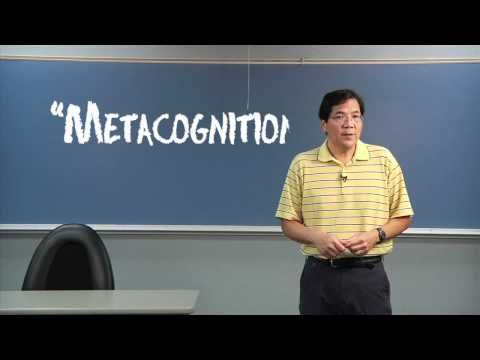
Samford University's video series on studying starts with the beliefs that get in the way.
How to study for exams in college or university
The method is the same; the conditions are harder. There are fewer past papers, more content per exam, and nobody checks whether you have started.
- Mine the course for questions. Problem sets, tutorial questions, lecture learning outcomes and the end of each chapter all work as practice tests. Turn every heading in your lecture notes into a question.
- Ask what the format is. Essay, multiple choice and problem-based exams need different practice: plans and timed paragraphs, question banks, or worked problems.
- Know what you need. If the final is weighted, the final grade calculator shows the mark required for your target, which tells you where to spend effort.
- Start the audit two to three weeks out when several finals land together, and rotate subjects daily. How many hours that takes is covered in how many hours you should study a day.
The day before and the morning of the exam
Use the list so that nothing practical costs you marks.
Day before and exam morning
Ticks are saved in this browser.
Some nerves are useful. If worry is stopping you sleeping or eating for days, or you feel panicky or low most of the time, talk to a GP or your school or university wellbeing service; the NHS page above says to get help when anxiety or low mood "is severe, persists and interferes" with everyday life. Our guide to exam stress covers what helps before and during the paper, and study burnout covers what to do when you have run yourself into the ground.
 Exam Stress: How to Cope Before and During Exams
Revising with other people
Revision plans fail at the starting line more often than anywhere else. Agreeing a time with someone else is a cheap way to make sure you sit down, and quizzing each other is recall with a witness. Our guide to group study explains how to keep it useful, and the Pomodoro method for studying gives the round structure the plans above use.
If your friends are elsewhere, Work Club is a free browser room with one shared timer: everyone works through the same 25 or 50 minute round with the chat locked, then it opens on the break for questions. It has no calendar or task list, so keep the plan itself on paper or in the schedule maker.
Common questions
How many days before an exam should I start studying?
As early as you can, because the same hours work better spread out. A week gives you time for two or three passes at each topic with a day or two between them, which is the spacing that research on one-week delays found most effective. If you have several exams, start two to four weeks out and rotate subjects.
Can I study for an exam in one day?
You can prepare for part of it. Pick the topics most likely to be examined, spend the day answering questions on them from memory, and check your answers. Do not try to read the whole course. Stop early enough to sleep, since a night without sleep after learning reduced recall in controlled studies.
Does cramming work?
For a test the next morning, partly: repeated reading produces good recall minutes to hours later. It fails for anything you need after that. In one experiment students who reread a passage had forgotten more than half within a week, while those who tested themselves kept more.
Should I pull an all-nighter before an exam?
It is rarely worth it. NHS guidance says cramming all night before an exam is usually a bad idea, and a study of school students found that staying awake the night after learning vocabulary reduced recall two days later. Study until a fixed time, sleep, and do a short review in the morning.
How many hours a day should I study for exams?
There is no evidence-based number that fits everyone. Three to five hours of real testing and practice papers, in blocks with breaks, is a workable full revision day for most students. More hours of rereading add little.
What is the best way to use past papers?
Sit them timed, without notes, then mark them against the mark scheme and write every lost mark into an error log. Re-test the error log two days later. Reading through a past paper with the answers beside you is far less useful.
Sources
- Test-enhanced learning: taking memory tests improves long-term retention, Psychological Science (2006)
- Improving Students' Learning With Effective Learning Techniques: Promising Directions From Cognitive and Educational Psychology, Psychological Science in the Public Interest (2013)
- Spacing effects in learning: a temporal ridgeline of optimal retention, Psychological Science (2008)
- Optimising learning using flashcards: Spacing is more effective than cramming, Applied Cognitive Psychology (2009)
- Sleep quality, duration, and consistency are associated with better academic performance in college students, npj Science of Learning (2019)
- Sleep after learning aids memory recall, Learning & Memory (2006)
- Study strategies of college students: are self-testing and scheduling related to achievement?, Psychonomic Bulletin & Review (2012)
- Help your child beat exam stress, NHS (2023)
Published 14 November 2026. Last checked and updated 14 November 2026. See how these guides are written.