Eat the Frog: What It Means and How to Do It
Short answer
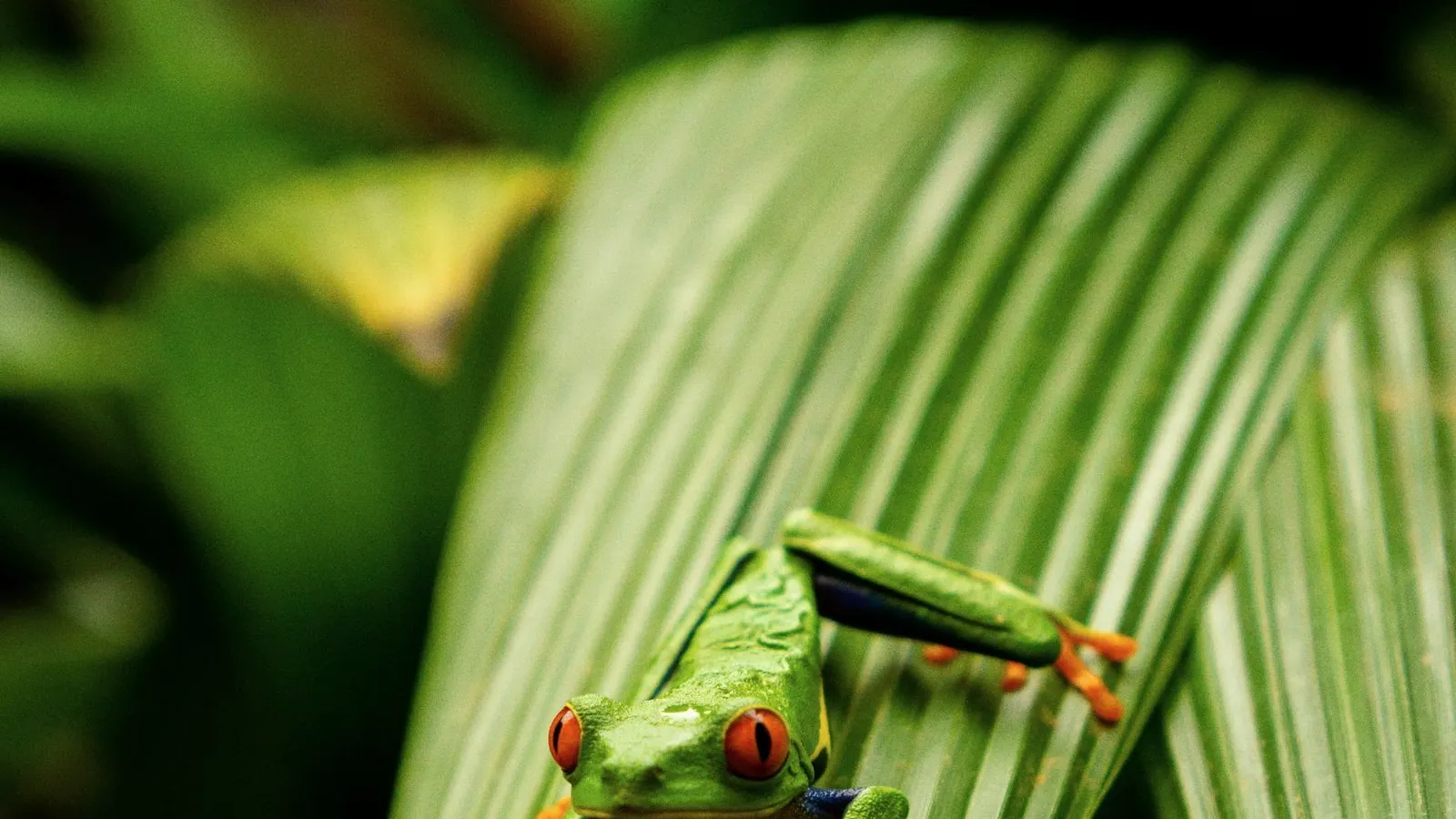
Eat the frog means doing your biggest, most important task first, before email and easy jobs, so it cannot be put off all day. Mark Twain did not say it: the line traces to the French writer Nicolas Chamfort around 1795, and Brian Tracy turned it into a method in his 2001 book Eat That Frog! Research supports not hiding in easy tasks, but the first-thing-in-the-morning part suits early risers far better than night owls.
Key takeaways
- Your frog is the biggest, most important task of the day and the one you are most likely to put off; the method is to do it before anything else.
- Quote Investigator traces the saying to Nicolas Chamfort around 1795, who wrote of swallowing a toad each morning; it was first linked to Mark Twain in 1988, 78 years after Twain died.
- Brian Tracy's 2001 book Eat That Frog! turned the line into a productivity method and repeats the Twain attribution.
- In a study of emergency doctors, heavier workloads pushed them towards easier cases, which raised short-term throughput and went with less learning over time.
- In a 2018 study, night owls were worst at 8am on every measure, so their frog belongs at their own peak, not at dawn.
- Choose the frog the evening before, shrink it to something that fits one sitting, and start it before you open your inbox.
Eat the frog means doing your biggest, most important task first, before email, admin and anything easy. The "frog" is the job you are most likely to put off, and the idea is that once it is done, the rest of the day is lighter. The phrase is usually credited to Mark Twain, who did not say it, and the "first thing in the morning" part is good advice for some people and poor advice for others.
Show the numbers
| Schedule in minutes | |
|---|---|
| Early riser, 08:00 to 12:00 | 90 focus, 20 short break, 50 focus, 10 short break, 40 other, 30 focus |
| Night owl, 10:00 to 16:50 | 60 other, 50 focus, 10 short break, 60 long break, 120 other, 20 short break, 90 focus |
Source: Example schedules
What does eat the frog mean?
Brian Tracy, whose book made the phrase famous, defines it on his own site: your frog is "your biggest, most important task", the one you are most likely to procrastinate on if you do not do something about it. His instruction is to tackle that major task first thing each morning and to finish it before moving on.
Two details matter:
- The frog is important, not merely unpleasant. Cleaning the oven is unpleasant. The dissertation chapter, the difficult conversation and the job application are frogs, because they have consequences.
- There is one per day. The method is a rule about what comes first, not a way of organising everything.
Did Mark Twain say "eat the frog"?
No. Tracy's page says Mark Twain "once said" that if the first thing you do each morning is eat a live frog, it is probably the worst thing that will happen to you all day. Quote Investigator, which traces sayings through dated documents, found a different history.
- Around 1795. The collected works of the French writer Nicolas Chamfort include a remark he attributes to a M. de Lassay: that one should swallow a toad (un crapaud) every morning. It was a joke about polite society, not about getting things done. The point was to be disgusted by nothing else for the rest of the day.
- 1851. An English translation of an essay on Chamfort carries the line into English, still with a toad.
- 1896. The earliest frog in Quote Investigator's sources, in an English magazine's commentary on a newspaper piece by Émile Zola that extended Chamfort's image.
- 1988. The first link to Mark Twain that Quote Investigator found, in a Cleveland newspaper column, with the hedge "if he didn't he should have". Twain died in 1910.
we should swallow a toad every morning, in order to fortify ourselves against the disgust of the rest of the day
The Eat That Frog book
The method, as opposed to the quip, comes from Brian Tracy's Eat That Frog! 21 Great Ways to Stop Procrastinating and Get More Done in Less Time, first published in 2001. Tracy took the supposed Twain line and built a set of habits around it: decide what matters most, plan the day in advance, start with the hardest item and stay with it until it is done.

when the saying first appeared in print, in the works of Nicolas Chamfort, as a toad.
Quote Investigatorthe earliest link between the frog and Mark Twain, who died in 1910.
Quote Investigatorpatient visits in the emergency-department study of doctors choosing easy cases under load.
Kellogg Insight, 2019How to use the eat the frog method
- Choose the frog the evening before. Ask which single task would make tomorrow a good day if it were the only thing you finished. If several compete, sort them with the Eisenhower matrix and pick from the important boxes.
- Shrink it to one sitting. "Write the dissertation" is a swamp, not a frog. "Draft the 400-word methods section" fits in 60 to 90 minutes.
- Write the first physical action. "Open the data file and label the columns." A named first step removes the pause where avoidance gets in.
- Set the scene. Leave the document open and the notes on the desk. Put your phone in another room; our guide to phone distraction explains why that works better than willpower.
- Start before you open any inbox. Email and chat are lists of other people's frogs.
- Work in a protected block. One deep work session or two or three rounds of the Pomodoro Technique.
- Stop when it is done, or when the block ends. Then take a real break before the easier work.
Step 1 has the best evidence behind it. Deciding in advance when and where you will start is what psychologists call an implementation intention, and a meta-analysis of 94 tests found these plans had a medium-to-large effect on reaching goals. Put the frog on your calendar as the day's first block; our time blocking guide shows how, and the time blocking planner will lay the day out for you.
TOMORROW'S FROG:
It is done when:
First action (takes under 2 minutes):
Start time:            Place:
What stays closed until then: email / chat / phone

If I finish early, next task:
Start the frog with one round
You do not have to finish it in one go. Start a round, do only the first action you wrote down, and see where you are at the bell.
Eat the frog examples
For students, the frog is rarely "revise biology". It is usually the kind of study that feels worst and works best: testing yourself on the topic you understand least. That is active recall, and it is the natural first block in any plan for studying for exams. For working adults, it is usually the task with no deadline today and large consequences later.
| Who | A frog | Not a frog |
|---|---|---|
| Student | One timed past-paper question from your weakest module | Rewriting notes in neater handwriting |
| Student | The first 300 words of an essay you have been circling | Formatting the reference list |
| Working adult | Drafting the proposal your manager is waiting for | Clearing 40 routine emails |
| Working adult | The phone call you have postponed three times | Reorganising your task app |
| Anyone | The application with a closing date this month | Researching new stationery |

Should you eat the frog first? What the evidence says
We could not find a study that tests "eat the frog" as such. Two nearby bodies of research say something useful, and they point in slightly different directions.
People drift towards easy tasks, and it costs them
The strongest evidence for the principle is a study by Diwas KC, Bradley Staats, Maryam Kouchaki and Francesca Gino, published in Management Science as Task Selection and Workload: A Focus on Completing Easy Tasks Hurts Performance. Using six years of data from a hospital emergency department, they found that as workload rose, doctors tended to pick easier cases. That helped throughput in the short run, but once the difficulty of the work was accounted for it was related to worse productivity, and to less learning over time.
Kellogg Insight's account of the study gives the scale: 84 doctors and more than 233,000 patients between 2005 and 2010, with each additional patient in a doctor's care linked to an 8% higher chance of choosing an easier case next. In a follow-up online experiment with 365 people, a heavier workload again pushed people towards the easier task.
Show the numbers
| Condition | Chose the easier task |
|---|---|
| Low workload | 64% |
| High workload | 76% |
Source: KC, Staats, Kouchaki and Gino, as reported by Kellogg Insight, 2019
The limits are plain. The main study is observational, in one hospital, among doctors. It shows that easy-first is the default under pressure and that it has a price. It does not show that the hard task must be done at 8am. It also explains why easy tasks are tempting: finishing something gives a sense of progress, which is no bad thing in small doses. The same pull towards quick, urgent jobs is covered in our guide to procrastination.
Is there a case for easy tasks first?
A limited one. The same researchers found that people reach for easy tasks partly because they are tired and partly because completing something feels like progress. A small win can supply that feeling cheaply. If one quick job gets you moving, do it, with two conditions: it takes 15 minutes at most, and the frog has a start time that the warm-up cannot push back. A morning of small wins with the frog still waiting at 4pm is exactly the pattern the hospital study describes. We found no experiment that compares frog-first with warm-up-first directly, so treat this as a judgement call and test both for a week.
Morning is not everyone's best time
The "first thing" part rests on the idea that you are sharpest early. On average, across a day, that has some support. A study of two million standardised tests taken by Danish schoolchildren found that for every hour later in the day a test was sat, scores fell by 0.9% of a standard deviation, and that a 20 to 30 minute break beforehand raised them by 1.7%. The effect is small, and the pupils were aged 8 to 15.
Averages hide body clocks. In a 2018 study of 56 healthy adults, researchers tested 25 early chronotypes ("larks") and 31 late ones ("owls") at 8am, 2pm and 8pm.
Show the numbers
| Measure | Larks' advantage at 8am |
|---|---|
| Reaction time | 8.4% |
| Executive function | 5.9% |
| Grip strength | 7.4% |
The sample is small and the tests were short, but the pattern is clear: larks peaked close to waking, and owls did not peak until many hours later. For an owl, "eat the frog at dawn" means meeting the hardest task of the day at their weakest hour. How to find your own pattern is covered in the best time to study.
 Best Time to Study: Morning or Night?
When is eat the frog the wrong advice?
- You are a night owl. Keep the rule "frog before the easy stuff" and move it to your peak. A short warm-up in the morning is fine if the frog has a fixed slot later.
- Your mornings are low-energy for now. A new baby, a late shift, a bad night. Forcing demanding work through exhaustion produces poor work slowly. See how to study when you are tired, and if tiredness has lasted for weeks without an obvious cause, see a doctor.
- Your mornings belong to other people. Lectures at 9, a daily stand-up, the school run. Your frog slot is the first block you control.
- The frog scares you into doing nothing. If the task is so aversive that "first" means "never", begin with a two-minute version of it: open the file, write one sentence. That is the habit form of the two-minute rule. If freezing is a regular pattern, read about ADHD paralysis, which describes the experience and what helps, whether or not you have a diagnosis.
- There is a real emergency. A deadline in two hours outranks the frog. Do it, then return.
- The frog depends on someone else. If you need data or a decision from another person, your frog today is asking for it.
Where should your frog go?
Three questions. It applies the rules of thumb in this guide; it is a starting point to test for a week, not a diagnosis.
Your result
Classic frog-first
Give the frog your first 60 to 90 minutes and open nothing else before it. Plan it the night before so the morning needs no decisions. Time blocking will protect the slot.
Your result
Warm up, then the frog
Allow yourself one small task of 15 minutes at most, then start the frog. Set a start time so the warm-up cannot spread. A Pomodoro round makes a clean boundary.
Your result
Frog at your peak
Book the frog into your best block later in the day and guard it as you would a morning. Do routine work before it, but stop 15 minutes early so you arrive fresh. See the best time to study.
What to use instead, or as well
| If your problem is | Try |
|---|---|
| You do not know which task is the frog | The Eisenhower matrix tool to sort by importance and urgency |
| The frog is too big to face | A two-minute first step, then one 25 minute round on the Pomodoro timer |
| You start and drift | A fixed block with a break, or working alongside someone: see body doubling |
| You skip the frog when nobody is watching | An accountability partner who asks at noon whether it is done |
| Motivation is low across the board | The causes and fixes in how to stay motivated to study |
The night-before routine
Five minutes before you stop for the day. Ticks are saved in this browser.
 How to Stop Procrastinating: What the Research Supports
Eating the frog with other people
Hard tasks are easier to begin when someone else is beginning theirs. Agree a start time with a friend, tell each other what the frog is, and work in silence until the first break.
In Work Club you type a name, get a room link to send, and everyone shares one timer. Each person can show what they are working on, so your frog is on display for the room, and the chat stays locked until the break. There is no scheduling or partner matching: you arrange the time with your own people.
Common questions
What does eat the frog mean?
It means doing your most important and most avoided task first, before smaller and easier work. The frog is the task; eating it early stops it hanging over the rest of the day.
Did Mark Twain say eat a live frog first thing in the morning?
No. Quote Investigator found no evidence that Twain said it. The saying goes back to the French writer Nicolas Chamfort, published around 1795, and was first connected to Twain in a 1988 newspaper column, long after his death in 1910.
What is the eat that frog book?
Eat That Frog! 21 Great Ways to Stop Procrastinating and Get More Done in Less Time is a short book by Brian Tracy, first published in 2001. It is the reason the phrase is now a productivity method.
Is it better to do the hardest task first or easy tasks first?
For most people the hard, important task should not be left to the end of the day, because under load people drift towards easy tasks and the hard one gets squeezed out. But first does not have to mean dawn. If you are slow in the morning, a short warm-up followed by the frog at your peak time is a reasonable version.
Does eat the frog work for night owls?
The first-thing-in-the-morning version often does not. In a 2018 study, late chronotypes performed worse at 8am than early chronotypes on reaction time and executive function, and did best in the evening. Keep the principle and move the hour: protect your best block for the frog, whenever it falls.
What if I have two frogs?
Pick one. Choose the one with the bigger consequences, give it your first protected block, and schedule the second for tomorrow or for a later block today. Two frogs in one morning usually means neither gets finished.
Sources
- Eat a Live Frog Every Morning, and Nothing Worse Will Happen to You the Rest of the Day, Quote Investigator (2013)
- Eat That Frog & Start Accomplishing Your Goals, Brian Tracy International (2022)
- Eat That Frog! 21 Great Ways to Stop Procrastinating and Get More Done in Less Time, Open Library (2001)
- Why You Should Skip the Easy Wins and Tackle the Hard Task First, Kellogg Insight, Northwestern University (2019)
- Task Selection and Workload: A Focus on Completing Easy Tasks Hurts Performance, Management Science (2020)
- Cognitive fatigue influences students' performance on standardized tests, Proceedings of the National Academy of Sciences (2016)
- The effects of time of day and chronotype on cognitive and physical performance in healthy volunteers, Sports Medicine - Open (2018)
- Implementation intentions and goal achievement: a meta-analysis of effects and processes, Advances in Experimental Social Psychology (University of Konstanz repository) (2006)
Published 14 November 2026. Last checked and updated 14 November 2026. See how these guides are written.